


Workplace & Retail EV-Ready Building Codes

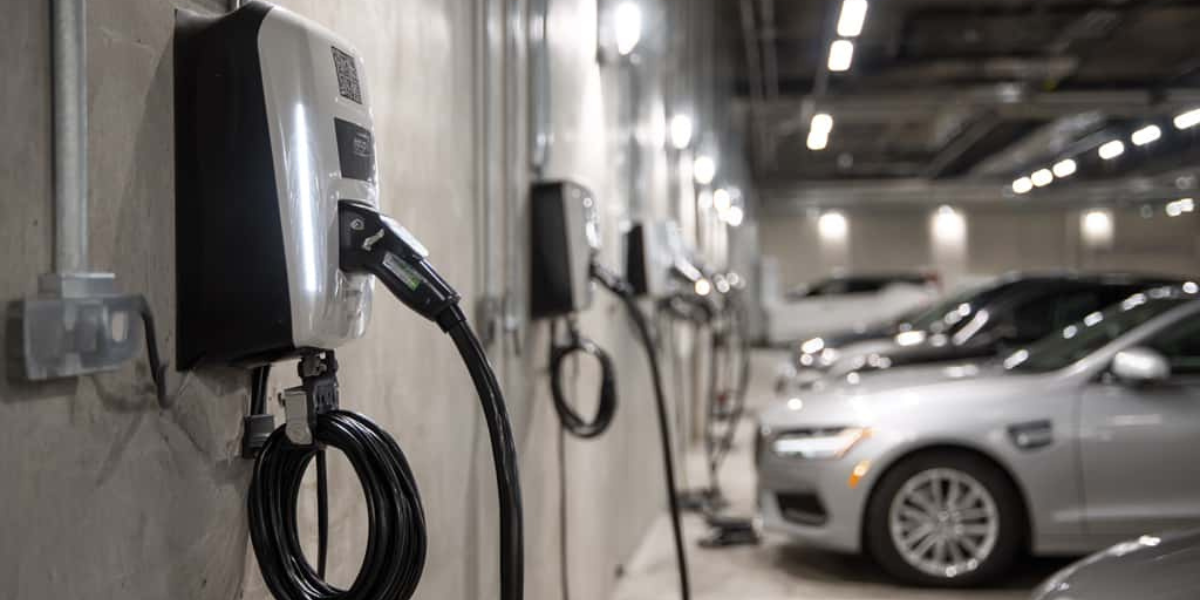
Employees and customers increasingly expect to find EV charging when they park at a workplace or retail property, but for a lot of new construction and major renovation projects in California, charging isn’t just a nice-to-have, it’s a building code requirement. The short answer: California’s building code requires a share of parking spaces at new non-residential construction, including many workplace and retail properties, to be built EV-capable or EV-ready, meaning the electrical infrastructure is in place even if a charger isn’t installed on day one.
Exactly which requirement applies depends on your project type, size, and local jurisdiction, this isn’t a one-size-fits-all number. What it means in practice is that a lot of properties already have to plan for this, whether or not charging was part of the original design. Here’s how to think about it, and what to do if you’re not sure where your property stands.
EV-Capable vs. EV-Ready, and Why the Difference Matters
“EV-capable” generally means the electrical panel capacity and conduit are in place to add a charger later without major rework. “EV-ready” goes a step further, with the wiring run out to the parking space itself, ready for a charger to be connected. Which standard applies, and to how many spaces, depends on your specific project and jurisdiction, get that from your local building department or a qualified electrical inspection rather than assuming a number from a different city or project type.
Why Workplace and Retail Properties Are Often Affected
New construction and major renovations are the projects most likely to trigger these requirements, which is exactly the category a lot of workplace and retail development falls into. Even a property that has no current plan to offer EV charging to employees or customers can still be required to build the electrical infrastructure in from the start, simply because retrofitting a fully finished parking lot later costs significantly more than running the conduit during construction.
Level 2 Is the Typical Fit Once You’re Ready to Install
Whether a property is required to go EV-ready or is voluntarily adding charging to attract employees and customers, Level 2 is the typical fit for workplace and retail properties. Employees are parked for a full shift, and shoppers or diners are commonly parked for an hour or more, both dwell times that suit Level 2 charging speed well, without the higher upfront cost of Level 3.
Mixed-Use and Multi-Tenant Retail Considerations
A single-tenant retail building and a mixed-use or multi-tenant shopping center don’t work through this the same way. Where several businesses share one parking structure or lot, the question isn’t just how many spaces need to be EV-capable, it’s who those spaces are allocated to and how access gets managed once charging is actually installed, an employee of one tenant versus a customer of another, for instance. That allocation question is worth settling during planning, not after chargers are already in the ground, and it’s a large part of why the same free site assessment matters as much for a multi-tenant property as it does for a single owner-occupied building.
Already Built? Code Isn’t the Only Reason to Add Charging
None of the above applies if a workplace or retail property was already built before these requirements existed, or if a planned renovation doesn’t meet the threshold that triggers them. That doesn’t take charging off the table, it just makes it a voluntary decision rather than a code requirement, and for a lot of properties the business case still holds: employees increasingly weigh it when choosing where to work, and shoppers and diners increasingly weigh it when choosing where to spend an hour or more.
An older property also isn’t stuck redoing a whole parking lot to get there, in a lot of cases the existing electrical service has more spare capacity than owners assume, and the assessment is what actually confirms that one way or the other instead of guessing. The path to figuring out what an existing property can support is the same free assessment either way.
Why Building It In Early Costs Less
The gap between EV-capable and a fully installed charger is mostly electrical work, running conduit and panel capacity while walls and pavement are already open during construction costs a fraction of what the same work costs after a parking lot is finished and paved. That’s the practical reason these code requirements exist in the first place, and it’s also why a property owner who plans ahead, even a step beyond the minimum code requirement, usually comes out ahead of one who retrofits later once employee or customer demand for charging shows up.
What to Ask a Contractor or Assessor
Before assuming a number from a different project or a different city applies to yours, get specific answers for your own property: how many spaces are actually required to be EV-capable versus EV-ready under your project’s exact classification, whether any exemptions apply, and what the incremental cost is to go beyond the minimum while the property is already under construction. A free site assessment and electrical inspection can answer that last question directly, the first two are best confirmed with your local building department.
Steps to Take If You’re Not Sure Where Your Property Stands
Start with your local building department if the property is new construction or a major renovation still in planning, since that’s where the actual applicable requirement for your project gets confirmed. If the property is already built and you’re considering adding charging voluntarily, a free site assessment and electrical inspection answers the same underlying question, what your property’s electrical capacity actually supports, without needing to first determine whether a code requirement applies.
Getting Started
Eagle 1 Solutions sells Level 2 and Level 3 chargers directly at distribution pricing and handles full turnkey installation through subcontracted installer partners, for workplace, retail, and every other commercial property type across Los Angeles, Orange, San Diego, Riverside, San Bernardino, and Ventura counties, plus Palm Desert and Victorville-Barstow. Every project starts with a free site assessment and electrical inspection, so you know exactly what your property needs, code-driven or not, before you commit to anything.